
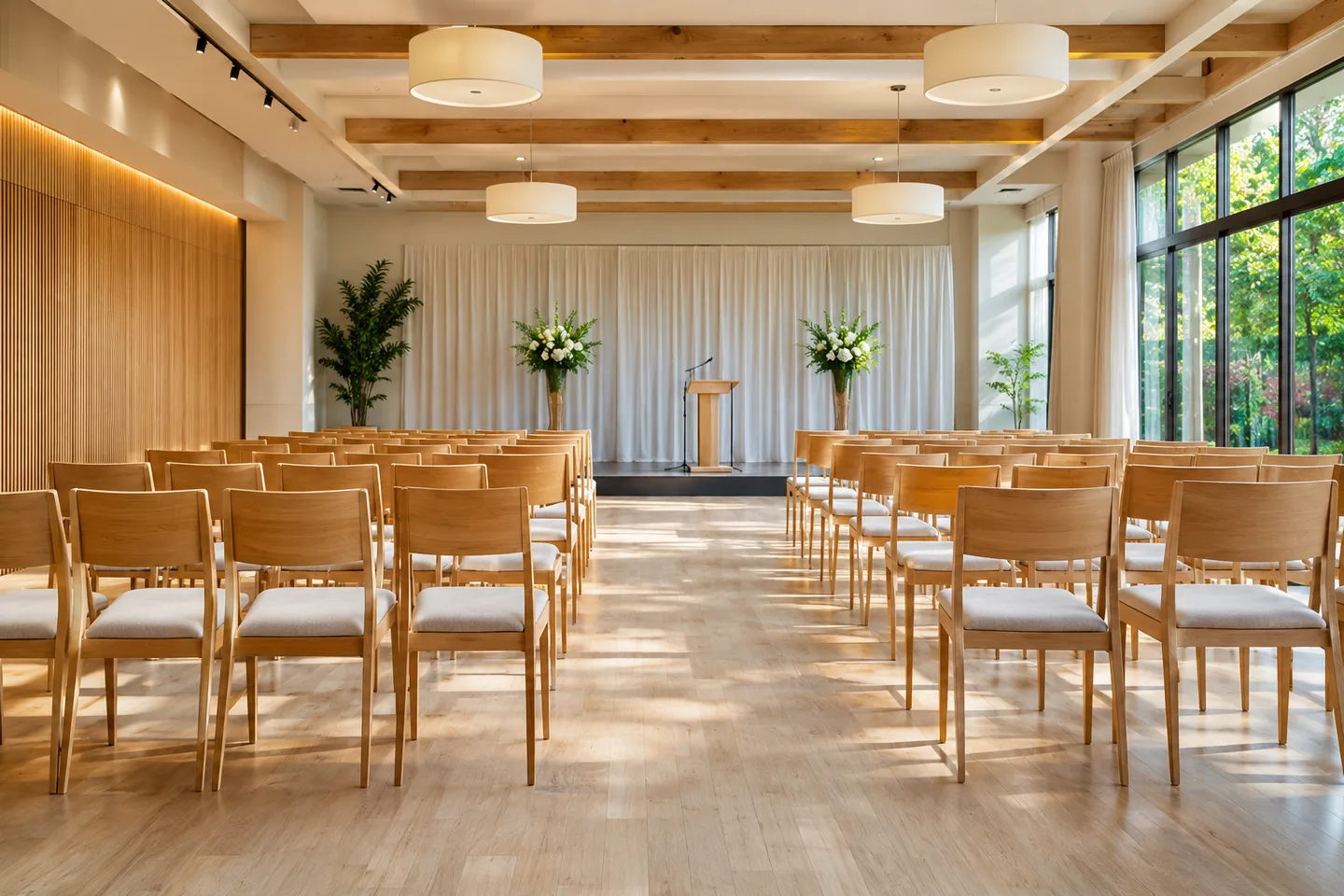
Specialty cleaning · North Georgia
Event venue cleaning and room resets
Coordinate approved work in a hall, meeting venue, or reception space before setup or after teardown.

Plan access and scope before scheduling.
Share the venue name, approximate floor area, event schedule, when setup or teardown ends, and who controls access.
Browse service areaIdentify the event phase
A pre-event clean prepares spaces before décor and furniture arrive. A post-event clean usually starts once rental items, personal belongings, and general debris have been cleared. Identify who confirms the space is available. If work must fit between two bookings, give the venue’s actual opening time and the earliest usable access window.
Plan by guest areas and access routes
List the hall, public entrance, restrooms, dressing rooms, and other approved spaces separately. Some rooms may remain occupied during the visit. Mark the areas guests need first and identify paths that must stay available for vendors and venue staff. Give a rough area or room count rather than expecting the venue name to define the work.
Coordinate vendor and rental activity
Establish when the catering, rental, décor, and production teams need the same areas. Cleaning can be limited if equipment, cables, furniture, or boxes are still in place. Identify who handles removal or repositioning. Do not ask cleaning personnel to disconnect equipment, handle stage rigging, or operate lighting and sound controls.
Define the approved floor and seating scope
Mention floors, stair treads, and reachable seating by material. A heavily used entry may need a different review from a carpeted meeting room. Ask about product limits for fresh coatings or specialty finishes. Provide a cleared room plan when available, and distinguish normal floor cleaning from stain treatment or floor restoration.
Agree on waste and incident boundaries
Discuss ordinary waste removal with the venue and identify what contractors or event staff will handle. Report breakage, hazardous residue, sharps, or other unusual conditions through the venue’s process. A cosmetic or room-reset quote does not cover specialist cleanup. If the venue cannot clear a zone, confirm whether it should be deferred.
Protect venue and attendee information
Do not upload attendee lists, access codes, vendor payment documents, or images containing identifiable guests. Use representative images of cleared work surfaces. The authorized contact should agree on a way to exchange private access information only after the estimate has been accepted and entry responsibilities confirmed.
Provide clear timing in the estimate
Tell us the city, ZIP, room capacity or approximate footprint, flooring types, and preferred window. Identify the event phase, when teardown is confirmed, and which rooms need review first. If the work must be phased, set the planned sequence with a contact who can approve changes as room availability changes.
Confirm handoff before reopening
Ask the facility who will review the work and what spaces need to be ready for the next booking. Allow time for the review and identify any separate vendor still preparing the property. Keep a record of the accepted scope, included rooms, and agreed exclusions so the next request can build on what actually worked.
Commercial and institutional cleaning · School cleaning · Government building cleaning · Bank branch cleaning · Office cleaning · Medical office common-area cleaning · Discuss an estimate · Read area information
Common questions
What details help with a quick room reset?
Give the usable interval after teardown and before setup for the next booking. List who will clear chairs, tables and rental items and when aisles and entry areas will become accessible. Identify spots the venue must review first before reopening. If the room will be reset in phases, name the person who coordinates other vendors. A limited window makes it especially useful to separate essential tasks from optional detail work. Outline the intended handoff and what to do if a vendor cannot remove equipment or a room remains occupied longer than expected.
What should the venue contact tell us about the floors and staging areas?
List the flooring materials and any care instructions, especially when a venue uses temporary flooring, fragile finishes or an outside vendor’s equipment. State which stage, service and storage areas are entirely excluded. Describe normal guest-facing surfaces separately from areas that need a specialist. Photos of empty cleared rooms can help identify layout and workspace. Keep technical equipment, access hardware and confidential vendor or attendee information out of the pictures. The venue contact should be available to answer questions about what can be moved and what must stay where it is.
How can a facility plan recurring event coverage?
Start with the typical schedule and a list of areas that consistently need attention between bookings. Some events use additional restrooms, smaller meeting suites, outdoor approaches or staff spaces that can be scoped separately. Identify who can set a work window for each date and what notice is needed if the timetable changes. A single written scope can describe the routine work, with a process for approving additions. The handoff should make it easy for the venue to confirm which tasks were completed or deferred and which matters belong with its own staff.
Can I request a pre-event and post-event estimate together?
Yes. Give both time windows and explain which tasks belong to each phase. Have the venue confirm when work can begin relative to rentals, catering, décor, and reopening.
Tell us what needs cleaning.
Share the site, requested scope, and available access window.