
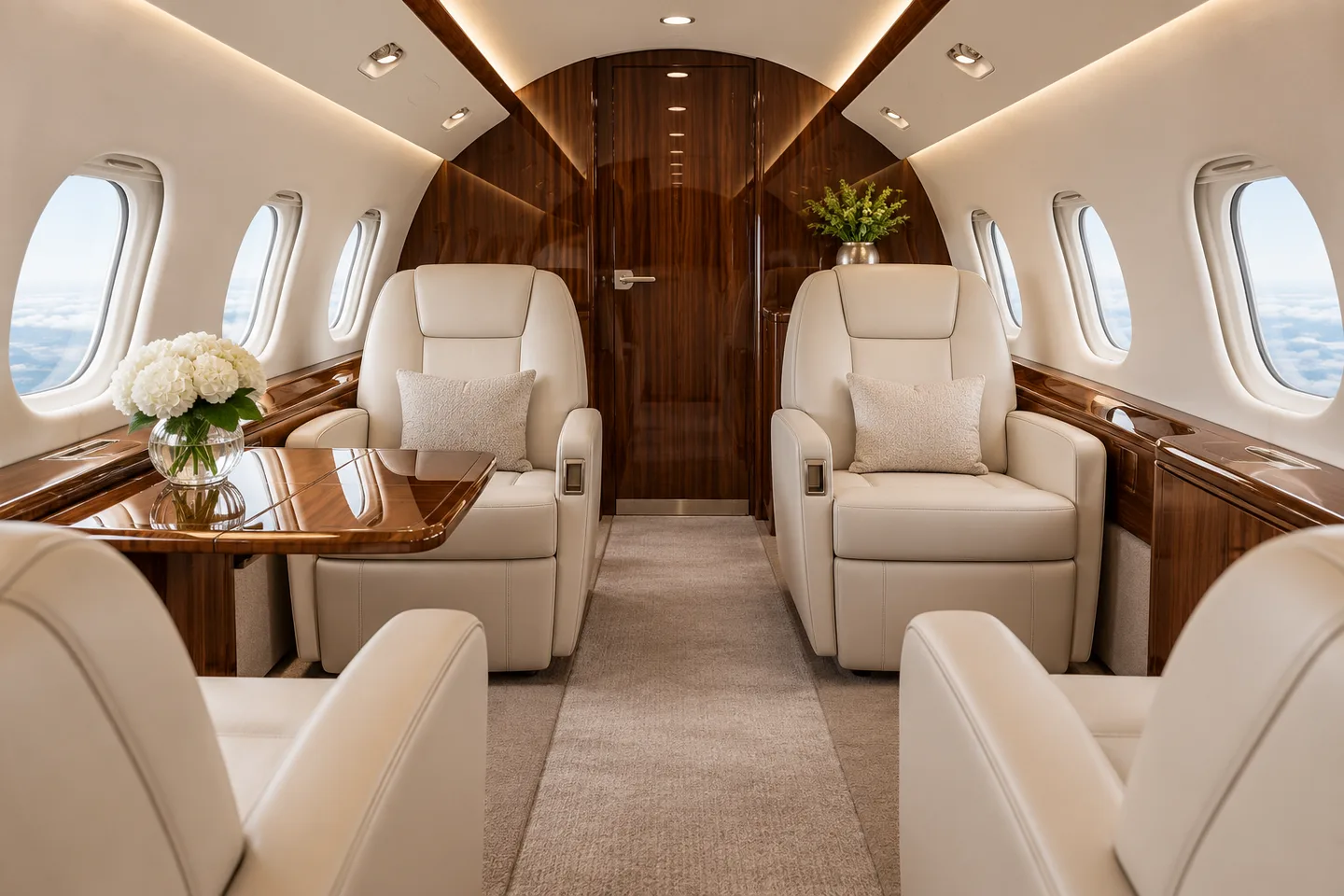
Specialty cleaning · North Georgia
Private jet cabin cleaning
Plan cosmetic cleaning for private jet passenger areas around a hangar window and operator-approved surface care.

Plan access and scope before scheduling.
Tell us the type of jet, passenger areas to include, material restrictions, and when the aircraft can remain parked for the full visit.
Browse service areaDetail work in focus
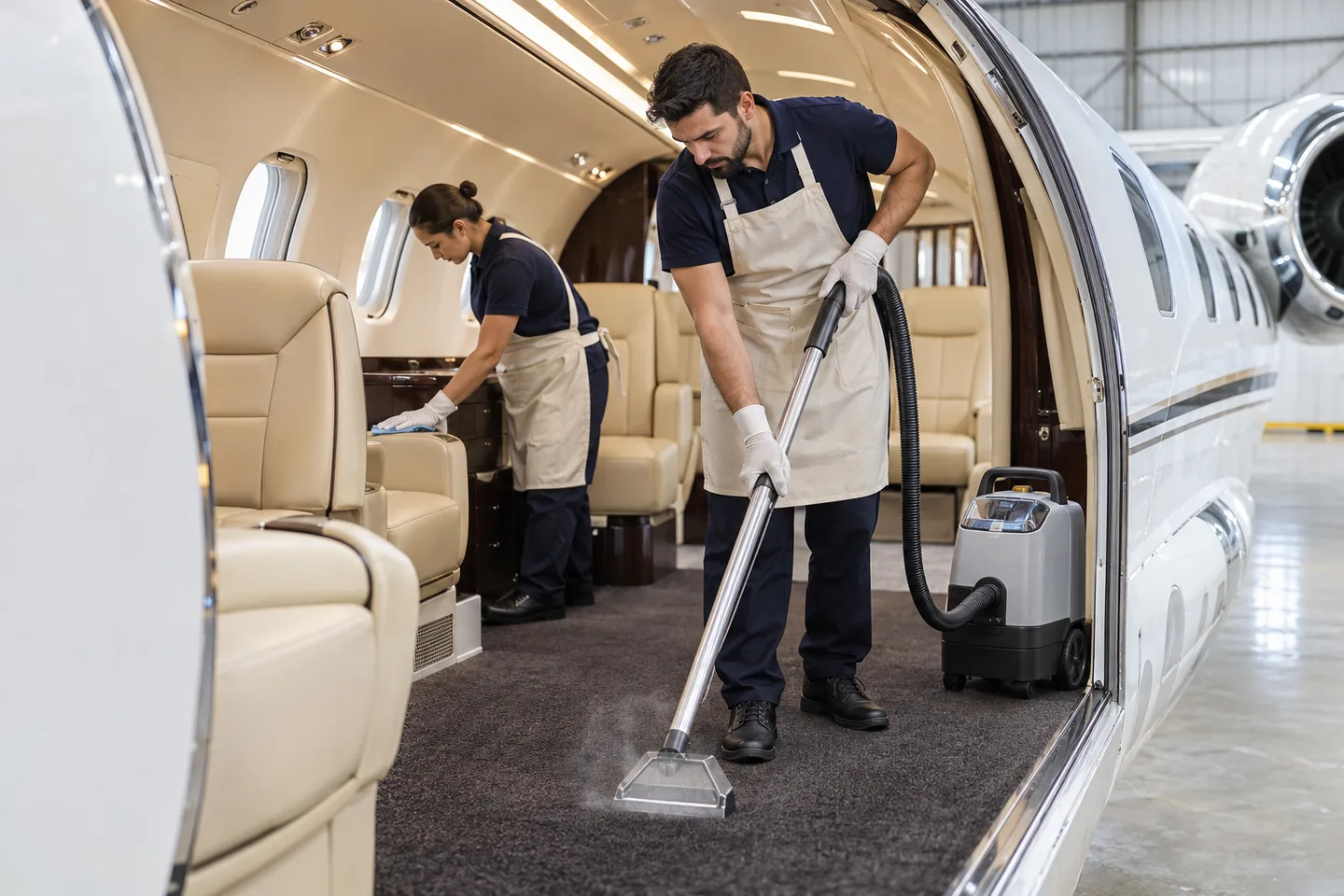
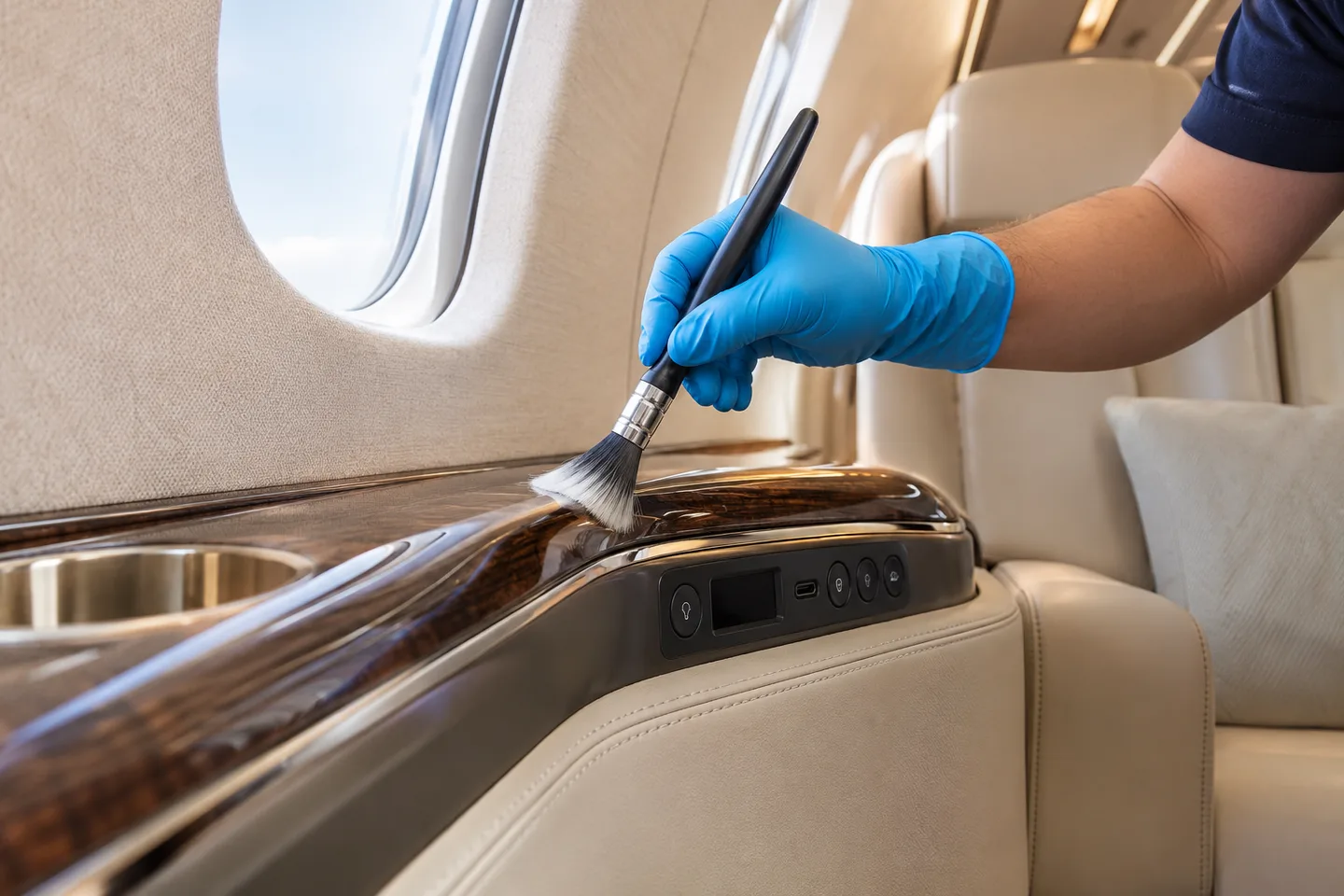
Illustrative scenes. Methods and included surfaces depend on the approved scope.
Set the purpose of the cabin visit
A jet cabin can need a presentation reset before a showing, attention after a trip, or planned detail work during a longer hangar window. Tell us which result matters most. A quick turnaround should have a clear set of priorities, while a larger scope calls for more time and a review of the areas that are safe and available.
Define the seating plan
Share the number of passenger seats and whether the cabin includes club seating, a divan, or tables that will remain set up. Identify cushions and built-in fixtures that should be left in place. Provide the material or care directions for leather, fabric, and trim when known. Discuss stains or wear separately so the estimate reflects their condition and access.
Plan around aisles and floor coverings
A narrow aisle and cabin step change how supplies enter and exit. Tell us about fitted carpets, loose rugs, and floor surfaces you specifically want evaluated. If areas are hard to reach, list the limitations without expecting disassembly or seat removal. Keep pathways clear. The approved scope should identify the areas actually available during the appointment.
Decide how counters and built-ins will be handled
Identify accessible counter surfaces, passenger tables, and cabinet exteriors that need attention. Ask before including a galley cabinet interior or changing the arrangement of supplies. Food service preparation, appliance servicing, and work involving wiring or drains belong outside a standard cosmetic scope. If the galley is sealed or stocked for a trip, say which surfaces should be left untouched.
Keep the flight deck out of the request
A passenger-cabin scope should identify a clear boundary at the flight deck, secured storage, and any technical equipment. Do not ask for work on controls, display surfaces, or safety equipment through the cabin quote. If it is unclear whether a surface belongs within the passenger scope, ask the operator to determine the boundary before the visit.
Use the hangar window realistically
A plane that is still being serviced, getting supplies loaded, or waiting on an operations decision may not be ready for cabin work. Confirm the escort and access hours, who provides the approved entry route, and when supplies must be out. Put any externally fixed departure window into the estimate discussion without sharing confidential itinerary details.
Request an estimate with a useful set of facts
Provide the facility city and ZIP code, approximate seats or cabin length, condition of the passenger space, requested surfaces, and available window. State whether the review is for one visit or a possible repeat arrangement. A list of essential items and options helps assess the work without implying that every area on board is included.
Agree on a single handoff contact
The person available at the end should know what was agreed, which areas were excluded, and how any unattended item should be handled. Record the scope and contact instructions in advance. If a surface needs restoration or a technical evaluation becomes necessary, discuss it through the operator rather than trying to add it to the cleaning visit.
Aircraft cleaning · Helicopter cleaning · Private jet carpet cleaning · Aircraft interior detailing · Discuss an estimate · Read area information
Common questions
How can I make the turnaround scope clear?
Start with seats, floor areas and passenger tables that need attention. Name any area that will be closed, in use, or handled by someone else. Ask the authorized operator to confirm who will provide entry and whether the cabin can remain available until the final walk-through.
What should I plan before a pre-sale viewing?
Set the viewing time and give yourself a separate window to review the passenger-facing areas. Decide which tables, seating areas, and visible surfaces are priorities, and whether sales staff will stage the cabin after cleaning. Keep any inspection or mechanical work on its own schedule. An appearance service cannot verify aircraft condition for a prospective buyer.
How do I report a spill or stain on a seat?
Describe the affected seating area and material to the authorized contact. Ask them to share the applicable care procedure before adding it to the scope. Staining, deterioration, and a normal surface reset are different issues. If the concern requires removal or restoration, seek the operator’s approval for a separate specialist.
Is the lavatory part of the cabin estimate?
Identify whether there is a passenger lavatory and which accessible cosmetic surfaces can be reviewed. Servicing or waste handling belongs with the responsible operator or vendor. State in advance whether the area will remain locked or available. The written scope should make clear whether its ordinary accessible surfaces are included or omitted.
What if the aircraft will be restocked during the visit?
Coordinate the order with the person managing the cabin. Ask whether restocking can happen afterward, or whether a particular area must remain out of scope during access. A request is easier to estimate when materials, loading times, and work areas are known. Arrange a final cabin walkthrough with the authorized person when feasible.
Tell us what needs cleaning.
Share the site, requested scope, and available access window.