
Specialty cleaning · North Georgia
Private jet cabin carpet cleaning
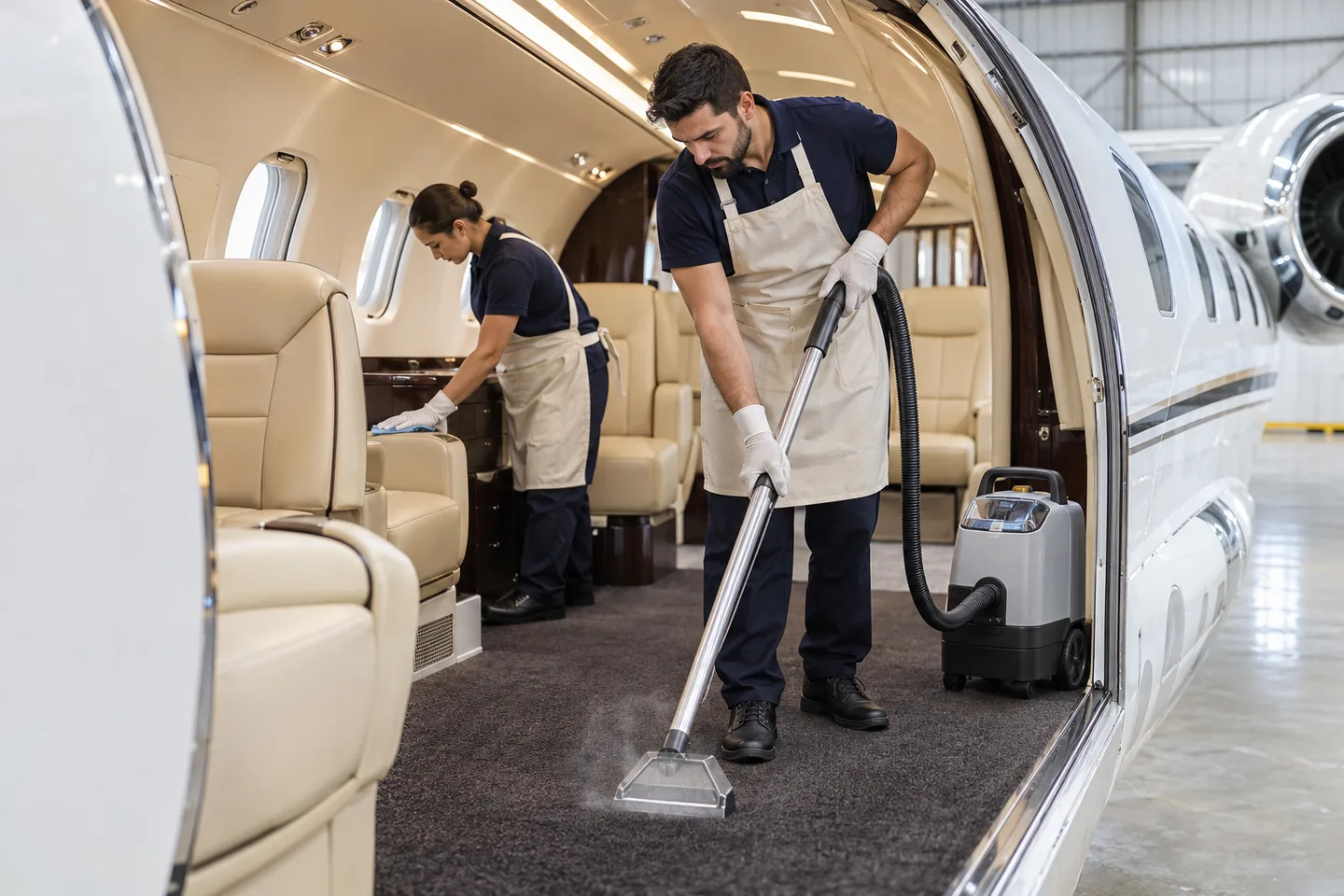
Discuss an operator-approved cleaning method for accessible passenger-cabin carpet and runners while the aircraft is parked.
Plan access and scope before scheduling.
Share the aircraft type, flooring material, areas affected, surface-care instructions, and available drying and handoff window.
Browse service areaIdentify which floor coverings are in scope
Start with the passenger aisle, boarding area, club seating section, and any loose runners to be considered. Give the operator’s material instructions when available. Tell us whether the carpet is removable, fitted around seats, or protected by a covering that only designated staff may remove. Assume fixed components stay in place unless the operator establishes otherwise.
Describe the condition by area
Light debris in an aisle is different from a concentrated spill under a table. Indicate where wear, marks, or moisture are present and roughly how much surface is involved. If cleaning products have already been applied, share that information privately with the contact who will review materials. Photos of the surface can help describe extent and location.
Select the method with the operator
Steam, extraction, or any other moisture-based method must be approved for the particular aircraft and flooring. The example imagery illustrates carpet care rather than a universal procedure. Discuss conditions such as backing material, adhesives, nearby finishes, and the encounter window. If the method is unsuitable, ask whether a different cosmetic scope is appropriate.
Keep liquids away from technical areas
An ordinary carpet scope does not include equipment cavities, seat track servicing, controls, wiring, or underfloor access. The operator should define which areas are excluded and answer questions before work is attempted. Any concern about moisture where it does not belong should be referred to qualified personnel, separate from the appearance review.
Allow time for access and handoff
Share the available hangar window, who controls entry, and when the aircraft needs to be returned. An estimate should account for operator-approved drying and inspection time rather than assuming a fixed turnaround. Passenger boarding and loading may need to occur after the operator accepts the cabin. Confirm actual availability before anyone travels.
Make the estimate specific to the aircraft
Approximate cabin length, aircraft make, model, year, and passenger seat count help distinguish different floor layouts. Use the aircraft fields in the quote form and identify the affected floor zones. If a third party owns the hangar, summarize escort or vendor requirements without including any codes, registration documents, or restricted facility photos.
Plan around repeat wear points
If the same paths are affected after several flights, discuss which sections need regular cosmetic care and which should be reviewed separately. A curb-to-cabin carpet estimate may have different access from work farther inside the aircraft. Keep the accepted materials, boundaries, and timing with the request so repeat planning can reflect the actual configuration.
Separate appearance from repair
A worn seam, lifted backing, wet panel, or damaged surface needs the operator’s direction. A cleaner can describe the visible area but cannot diagnose or repair it. Let the authorized contact decide whether a separate maintenance provider should assess the problem before another appearance service is planned.
Aircraft cleaning · Private jet cleaning · Helicopter cleaning · Aircraft interior detailing · Discuss an estimate · Read area information
Common questions
How much of the carpet do I need to include in the estimate?
Point out whether the concern is in the boarding area, aisle, around passenger seating, or in several sections. Describe each area independently, including what is normally covered by a runner and which items will be moved by the operator. A close photograph can show the size and location of the concern. Include the material type and any instructions available to the operator. Discuss what portion is essential if the aircraft is only available for a short time and what can wait for a longer window. A quote can then reflect accessible floor covering and the condition you want considered.
Can a quick turnaround include any particular treatment?
The operator should first confirm which processes the aircraft and carpet can accommodate and how much usable time exists between access and handoff. A tight schedule can favor a narrower cosmetic scope. If the requested method requires a longer period for the cabin to be ready, adjust the plan instead of assuming the same turnaround applies. Share who approves access, where supplies may be staged, and whether the aircraft will need to remain closed to other activity during the work. Any airworthiness decision remains with the operator and responsible personnel.
What if a runner can be taken out by the operator?
Flag the removable item separately from fixed carpeting. The person who manages the cabin should decide whether the runner is cleared for removal and who may handle it. Give the covering dimensions and care directions if known. Discuss whether cleaning would be performed in an approved location and when the operator needs it back. Keep installed flooring, equipment, tracks, and attached parts out of an ordinary removal request. A split estimate may be useful if the aisle and the removable items have different care or timing constraints.
Can I ask about aircraft from an older model year?
Yes. The aircraft’s actual floor covering, condition, approved methods and access determine the scope. The year, make and model are useful for discussing layout, especially if the interior has been refitted. Mention changes that affect the passenger areas so the operator can provide current instructions.
Tell us what needs cleaning.
Share the site, requested scope, and available access window.