
Specialty cleaning · North Georgia
Aircraft passenger interior detailing
Plan a passenger-cabin detail around approved seating, aisle, cabinetry, and decorative trim.
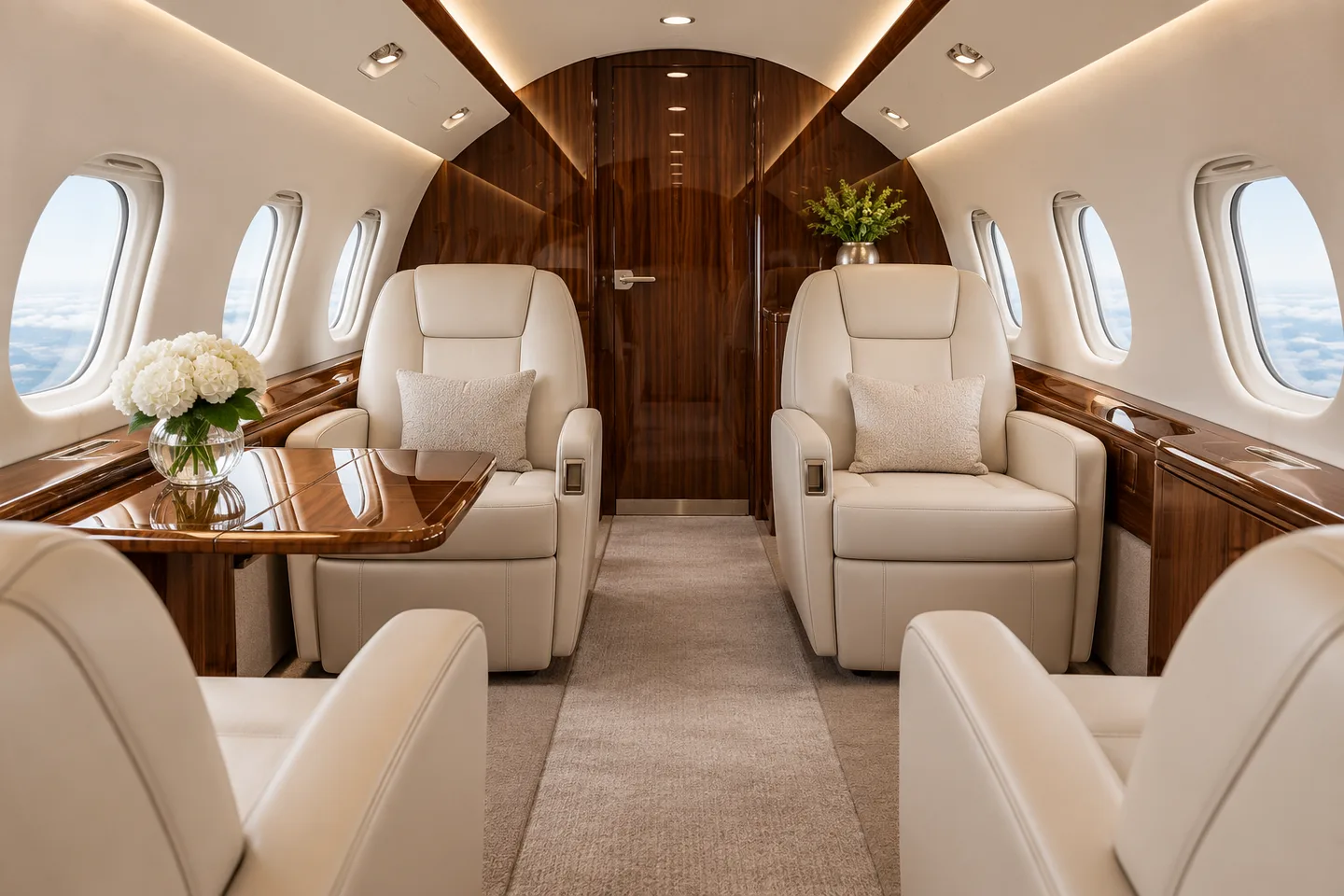
Plan access and scope before scheduling.
Provide the aircraft make and model, cabin layout, finishes, operator-approved methods, and the authorized person who will define work boundaries.
Browse service areaIdentify passenger-facing details
Start with decorative trim, accessible cabinet exteriors, tables, and cabin seat surrounds. List the surfaces that matter and where they sit. Tell us about delicate materials, fitted trim, or zones that must remain untouched. A more precise location description is more useful than assuming a broad detail includes every part of the aircraft.
Distinguish trims from operating equipment
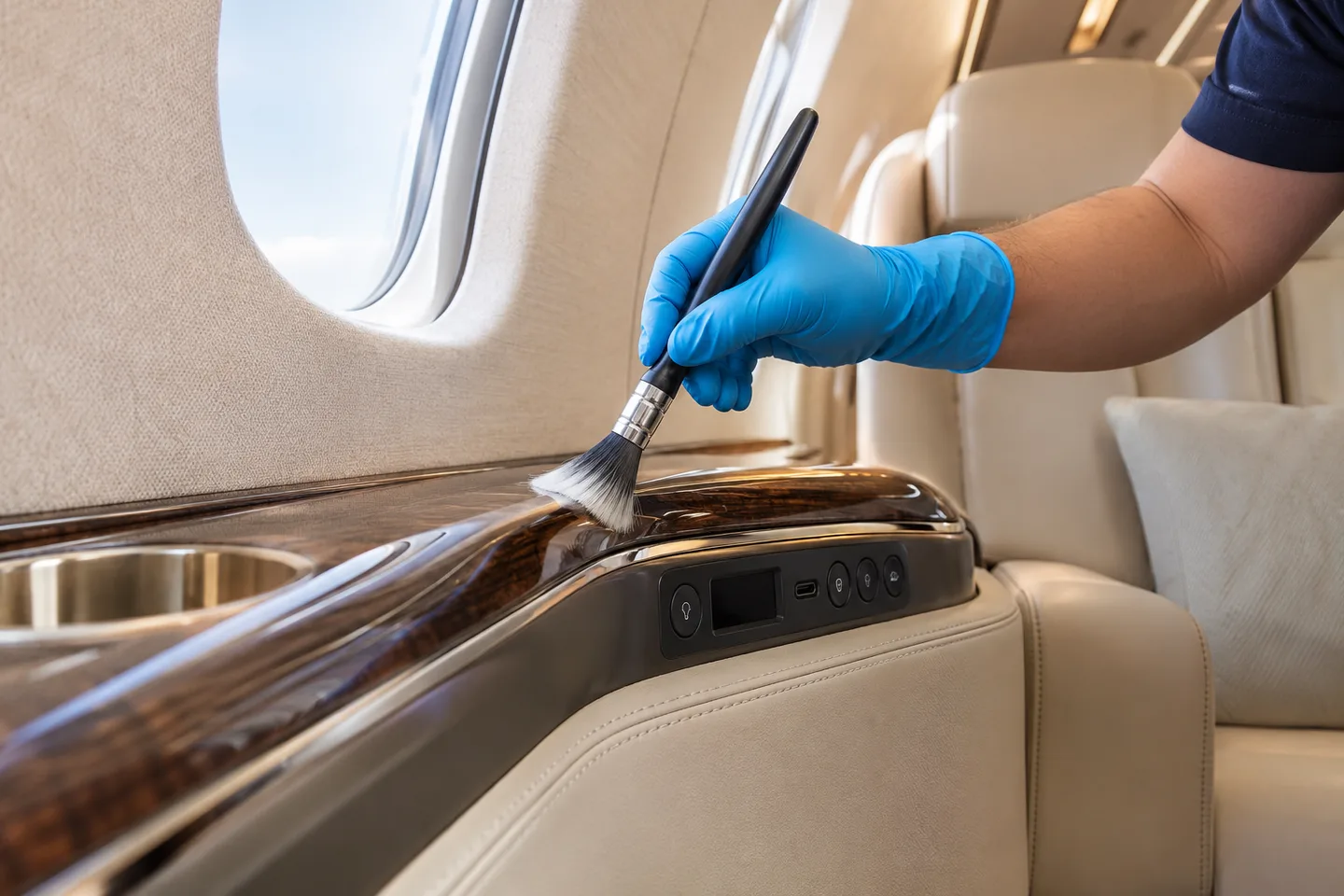
Cosmetic care can be considered on approved decorative surrounds near passenger consoles. Controls, switches, touchscreens, electrical connectors, vents, safety equipment, and the flight deck stay outside the ordinary scope. The operator must identify the boundary. The illustration shows brushing adjacent trim and is not a procedure for working on aircraft systems.
Let materials guide the scope
Coated wood, acrylic, brushed metal, leather, and decorative textiles may call for different care. Provide operator or manufacturer restrictions, and say which products or methods should be reviewed by the authorized contact. Report damaged finishes, loose trim, and prior treatment so they can be handled separately instead of approached as ordinary surface soil.
Plan around items that stay in place
Identify accessories, fixtures, supplies, and storage that should remain undisturbed. The authorized contact can clear passenger belongings before work or define a narrower area. A detail does not include disconnecting hardware, disassembling furniture, altering a fitting, or accessing electrical compartments. Keep equipment and documents outside the ordinary work path.
Use a clear purpose for the appointment
A cosmetic reset before a viewing can focus on visible materials and guest areas. An ongoing detail can target trim and surfaces that collect routine dust. Tell us whether timing depends on a showing, cabin crew review, or another contractor. Give the approved duration while the aircraft is parked and has no conflicting activities.
Make a useful outline before requesting pricing
Include aircraft year, manufacturer, model, cabin size, approved facility name, and preferred time window. List surfaces by room or zone and mark any restricted area. Leave out visible registration identifiers, private flight details, and security information when submitting photos of the cabin. A close-up of the relevant finish often provides enough context.
Review the work with the operator
Decide who will check the passenger zones and confirm that supplies have been removed. Give that person the scope and record whether any spaces were closed or unavailable. If a visible mark appears to involve damage or equipment, refer it to the operator rather than expanding the cosmetic work without approval.
Plan finish maintenance separately from technical work
If a surface needs restoration, engineering advice, upholstery replacement, or technical service, coordinate it with a qualified provider before relying on ordinary cleaning. A cosmetic estimate should describe accessible surfaces and exclusions in plain language. Ask the operator to resolve any uncertain boundary before time or pricing is committed.
Aircraft cleaning · Private jet cleaning · Helicopter cleaning · Private jet carpet cleaning · Discuss an estimate · Read area information
Common questions
Can a cabin detail include surfaces around a passenger console?
Only approved cosmetic zones should be considered. Ask the operator to identify where the decorative surround ends and where controls, ports, vents, or other equipment begin. A photo taken with permission can help distinguish the materials without showing technical information or identifiers. If an area is difficult to classify, exclude it until the responsible operator has clarified it. A general request to detail the console should be rewritten as a list of approved passenger-facing surfaces. The cleaning scope does not include operating, servicing, or releasing any aircraft system.
How do I compare a detail with a passenger-cabin reset?
A reset can focus on accessible seating areas, the aisle and surfaces that receive routine use. A detail may include separately identified trim and decorative finishes where the operator’s instructions allow it. Describe the areas that are important to a viewing or long-term appearance, along with current condition and time available. When comparing estimates, check whether both include the same surfaces, access and handoff review. Ask which finishes need another provider and whether any optional work should be scheduled separately to preserve the intended timeline.
What if a cabin has been refitted or has custom finishes?
Give the actual cabin configuration, current material guidance and approximate dimensions rather than relying on the aircraft model alone. The operator can identify any difference from the original interior, including passenger trim or surfaces with a special finish. Share whether any change is under warranty or whether a supplier should approve the approach. Keep any technical drawings, IDs and other sensitive files out of the initial quote. Confirm the person who can check the included finishes after work and discuss what to do if any expected area is unavailable when the visit begins.
Can an older jet receive the same appearance review?
Yes, an older model can be considered. Confirm the finishes and the operator’s current care instructions first. Two aircraft with the same model designation may have very different passenger interiors, prior treatments and access requirements.
Tell us what needs cleaning.
Share the site, requested scope, and available access window.