
Deep Cleaning Services by Icon LLC
Service and Access Disclaimer
Website and residential service information from Deep Cleaning Services by Icon LLC.
Effective date: November 18, 2026.
What the site describes
The site explains ways to request ordinary residential deep cleaning, maintenance visits, and move-related cleaning. The listed examples can help prioritize a visit. The accepted scope determines what work is actually being arranged. Conditions that require special equipment or a specialty contractor should be raised early.
Hazards and specialty work
Report suspected mold, pests, chemical spills, sharp objects, bodily fluids, construction debris, damaged structures, and any other potentially unsafe conditions before scheduling. Ordinary house cleaning does not establish that a property is safe or certify that a hazard has been removed. Obtain an appropriate professional assessment when needed.
Delicate and damaged materials
Tell us about finishes that require a particular product or technique. Staining, fading, mineral etching, paint damage, grout failure, and wear can remain visible after routine work. An estimate should make clear which surfaces are accessible and what level of work is contemplated. Repairs or restoration should be discussed with the appropriate provider.
Access and animals
Arrange parking, room access, utilities, and any pet precautions before the visit. Keep keys, alarm codes, and identifiable household information out of the quote form. If entry, water, power, lighting, or ventilation is unavailable when work is expected, contact the business to discuss how that affects the visit.
Lease or sale milestones
A cleaning visit can be part of your plan for inspections, closings, or new occupancy. Decisions about deposits, lease obligations, or property acceptance belong to the parties responsible for those agreements. Review the work against the accepted cleaning scope and leave enough time to address unrelated repairs or obligations separately.
Availability and changing schedules
Service depends on location, scope, access and appointment timing. Share any hard deadline and let the business know if the intended site or access changes. An inquiry does not schedule service.
Illustrations and expectations
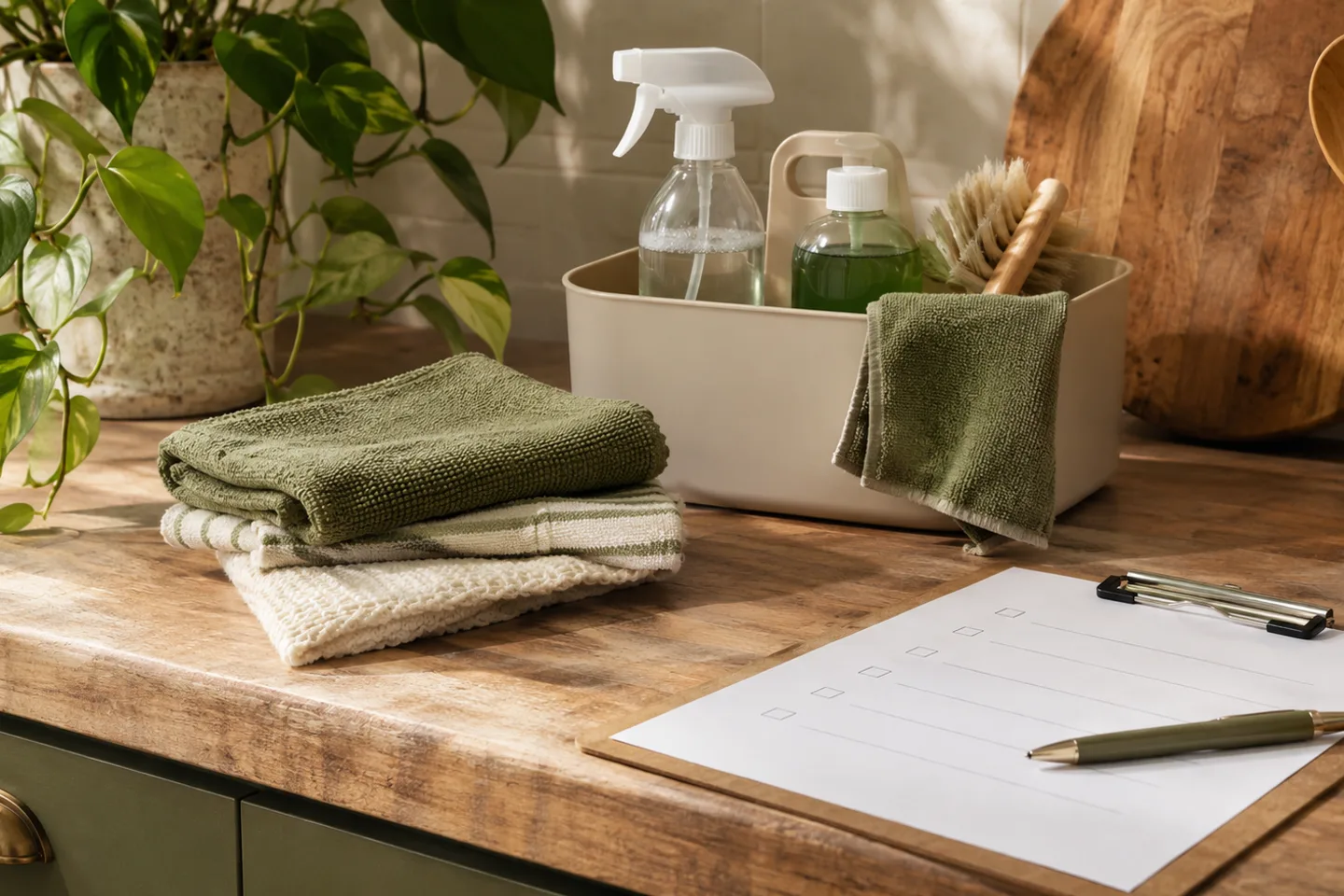
Photographs on the website illustrate cleaning situations and residential spaces. They do not show actual customers, work outcomes, or employees. Talk through the expected work, location, timeline, and any special concerns before arranging a visit.
Discuss product storage and desired handling
If you want specific products considered, provide their names and any care directions relevant to the surfaces. Inform the business about access restrictions, product residue, and conditions such as recently refinished flooring or surfaces still under a contractor’s care. Ask who should decide whether a material can be treated safely. An instruction to use a particular product can affect the work and should be discussed as part of the scope. Keep containers with clear labels and avoid leaving unidentified mixtures or other substances for routine household cleaning.
How to prioritize if all rooms cannot be reached
Agree on the rooms and tasks you consider essential. If a space is blocked by belongings, occupied by other workers, or no longer available, the original plan may need to change. Decide which accessible areas can still be considered without entering spaces that were excluded. Tell the person who will review the work about the change and confirm any effect on the expected scope. If a room must wait for access or separate work, discuss whether a later visit would be appropriate.
Accessible surface work
The scope of a visit depends on the surfaces that can be reached and the time needed for them. Examples include worktops, lighting-safe accessible areas, occupied living spaces, and open floor edges. Discuss surfaces behind furniture or above safe working height before the visit. Describe obstacles, delicate possessions, or items that need to stay exactly where they are. A request for a detailed clean does not by itself establish that every concealed, elevated, or obstructed surface is included. Ask about the parts of a room that are especially important to you.
Confirm the condition before agreeing to an approach
A room can need more than a standard cleaning task even if the description initially appears simple. Name any visible damage, loose materials, persistent odors, or heavy buildup that can affect the scope. Tell the business if recent work has changed the material, if floors were just refinished, or if a previous product caused a reaction. For specialty surfaces, provide the manufacturer’s care directions when available. A proposed task may need to be revised if the condition is materially different when the property is seen.
Results depend on materials and wear
Older scratches, fading, permanent stains, worn finishes, and water-related damage can look like removable residue. A cleaning visit may make the difference between soil and damage easier to see. It does not restore a damaged finish or guarantee a surface will look new. Ask what level of work can safely be attempted. If an area needs repair or restoration, discuss the specialist required for that material. Reconfirm the sequence of work if an ordinary clean is planned after another contractor performs repairs.
Products and sensitivity concerns
If you have a concern about fragrances, preferred supplies, or products a surface should avoid, raise it when discussing the scope. Name the product restrictions or surface requirements in practical terms. Avoid providing unnecessary medical information in a request. Discuss any cleaning instructions for your own products when you want them considered. A general residential clean does not imply a medical outcome, clinical disinfection, or an environment free from allergens. Ask the appropriate professional about needs that require a specialized result or regulated method.
Renovation, debris, and other work
A cleaning visit planned for an occupied or vacant home should account for Dust and debris from any separate project. Report construction dust, loose nails, broken glass, unusual materials, or heavy boxes before arranging work. A remodeling contractor, disposal company, or specialty cleaner may need to handle those conditions. A broad request to prepare the home does not authorize moving heavy items or handling hazardous residue. Schedule other work to finish before an ordinary residential clean where possible, and state what will still be present during the visit.
Clutter, valuables, and access barriers
Identify surfaces that can be reached without moving valuables, fragile items, important papers, or electronics. Clear a working path where you can. If a room contains stored items, decide what should remain untouched and discuss accessible floors or surfaces. Tell us about locks, closed rooms, special doors, pets, or furniture that cannot be moved. Private instructions should be arranged after a visit is confirmed. Scope can be affected if the property is inaccessible or the conditions prevent the agreed areas from being reached safely.
Properties with more than one decision maker
Where work is arranged by a landlord, household member, property manager, or someone coordinating a move, decide who can approve the scope and changes. Every person involved should know who will provide access, which items are staying, and who will be available if questions come up. Avoid including a tenant’s private documents or access details in the public quote form. Share the minimum details needed to coordinate a visit, and confirm separately any restrictions a landlord or resident has placed on the work.
Planning a move or vacancy clean
Describe the expected vacancy, when movers must finish, whether other trades will still be on site, and the handoff deadline. Confirm water and lighting needs and identify any appliances or cabinet interiors that should be discussed separately. An inspection often involves criteria other than cleaning, including repairs and fixture condition. Allow time to evaluate the accepted work before access ends. If units or rooms become occupied before the visit, update the scope early so everyone understands which areas are available and what can still be considered.
Confirm the appointment details
Share a city and ZIP with the initial inquiry. The business can confirm whether the location, requested work, and preferred date can be accommodated before you arrange a key exchange or schedule other providers around the visit. If the address or timing changes, confirm the updated appointment. Use a private contact channel for a full address or other arrangements that should not appear in a public form.
When conditions make a visit impractical
A hazard, uncertain access, utility interruption, or material change to the property can make the planned work unsuitable. Raise the issue early and ask whether an adjusted scope, different time, or appropriate specialist is needed. A description on this site does not authorize the cleaner to move hazardous items or enter areas your household has not approved. Customers should arrange separate help for conditions that require it. Put safety and access instructions in the confirmed visit arrangements and keep a reachable contact available for time-sensitive choices.
What happens if there is a concern afterward
Refer to the accepted cleaning scope and identify the date, room, and task involved. A specific observation is easier to discuss than a general statement about the outcome. If it appears related to damage, wear, or a different area from the original work, explain what you noticed and when. Ask the business how to share an appropriate photo through a verified channel if useful. Follow the individual visit agreement for any time-sensitive step, and discuss separate lease or sale issues with the responsible third party.
Keep public descriptions and the agreement together
Use the service pages for preparation and compare them with the actual estimate. The site does not substitute for arrangements specific to a property and does not make unrelated professional judgments about damage, safety, health, or tenancy. Request clarification when a term is important for the decision to hire. Review the Website Terms for use of the site and the Privacy Notice for questions about submitting a request. Illustrative images show general ideas and are not proof of a specific job, promised outcome, or customer experience. The accepted service scope controls the details of an individual cleaning visit. For an estimate, identify the property type, city, requested tasks, and any surface that needs special care. The estimate discussion determines whether that task can be included.